
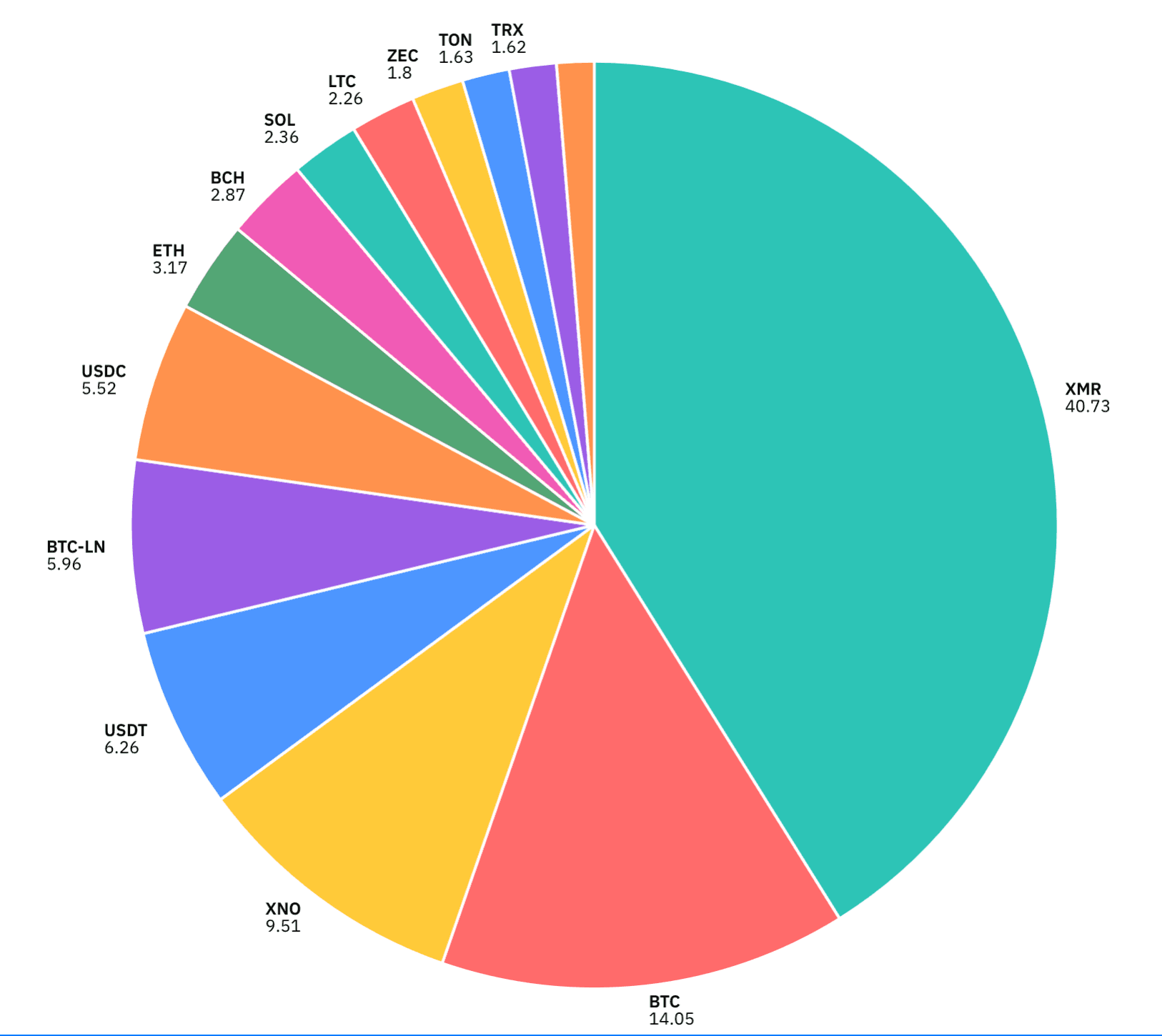
June 2026 Crypto Payment Statistics: Monero Leads, Stablecoins Broaden
June 2026 NanoGPT crypto deposit data, with Monero at 40.73%, Bitcoin second, Nano third, and stablecoins at 11.78% combined.
Updates, guides, and insights
Showing
June 2026 NanoGPT crypto deposit data, with Monero at 40.73%, Bitcoin second, Nano third, and stablecoins at 11.78% combined.

A complete roundup of what NanoGPT shipped in June 2026, including Private Mode improvements, Sign in with NanoGPT, Batch API expansion, new models, media tools, payment updates, privacy controls, and community projects.

DeepSeek V4 Flash, GLM 5.2, MiniMax M3, and Nemotron 3 Ultra show why open-weight models now deserve first-round testing for coding, long-context work, agents, and enterprise workflows on NanoGPT.
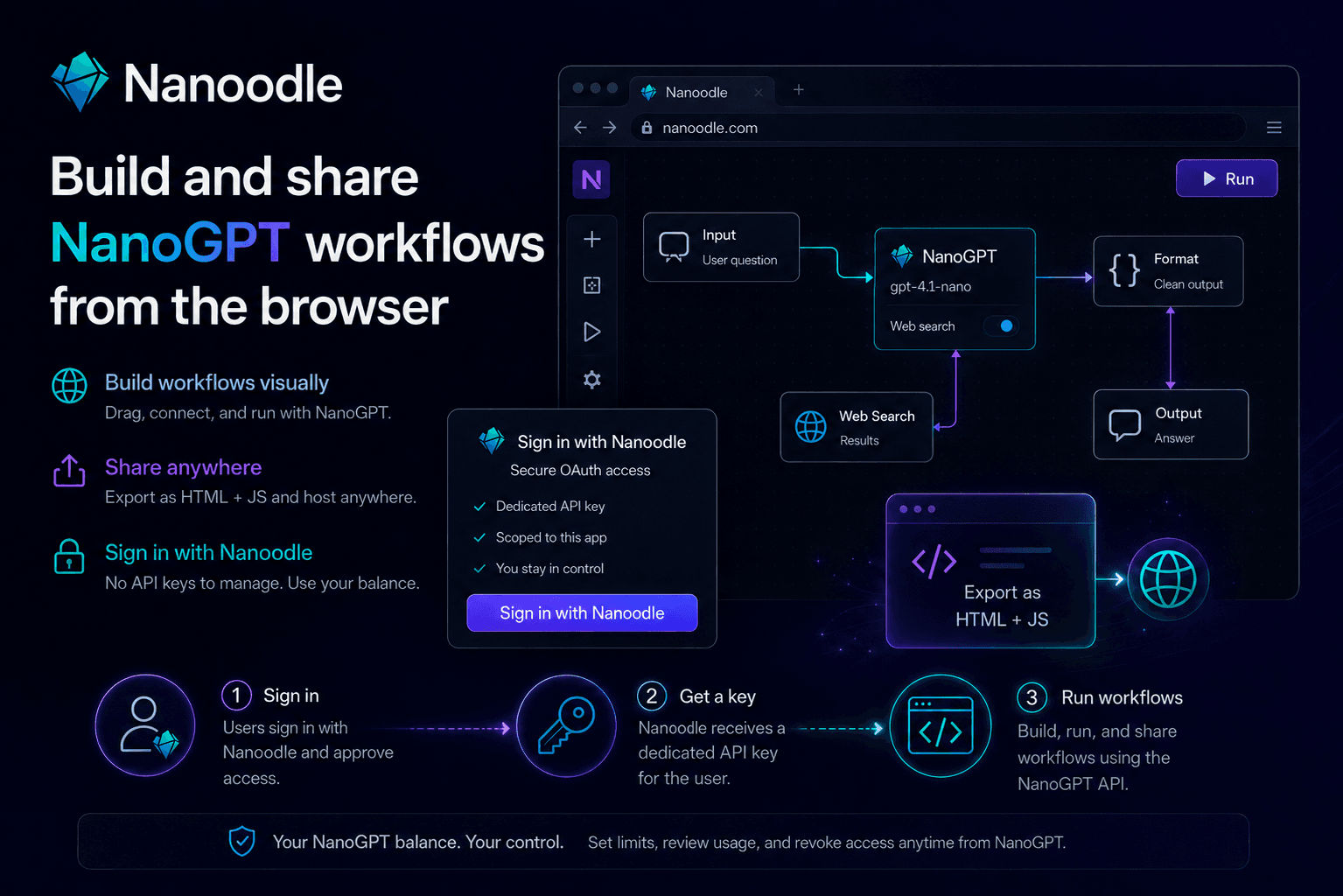
Nanoodle lets you share NanoGPT workflows that users can open, sign in to, and run with their own NanoGPT balance.
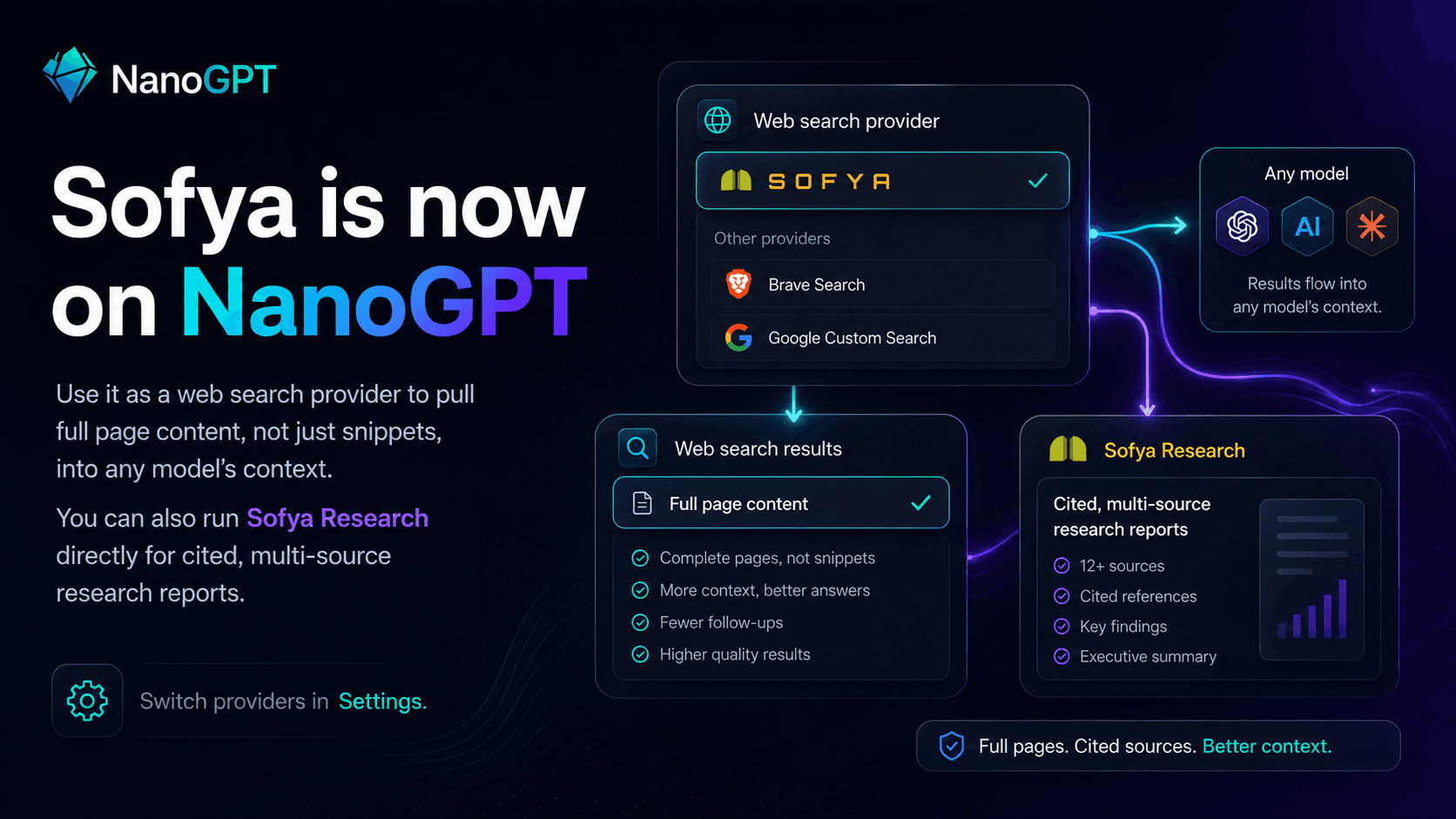
Sofya is now available on NanoGPT as a web search provider and as the Sofya Research model, bringing page-content search, URL fetching, AI extraction, and multi-source research into one workflow.
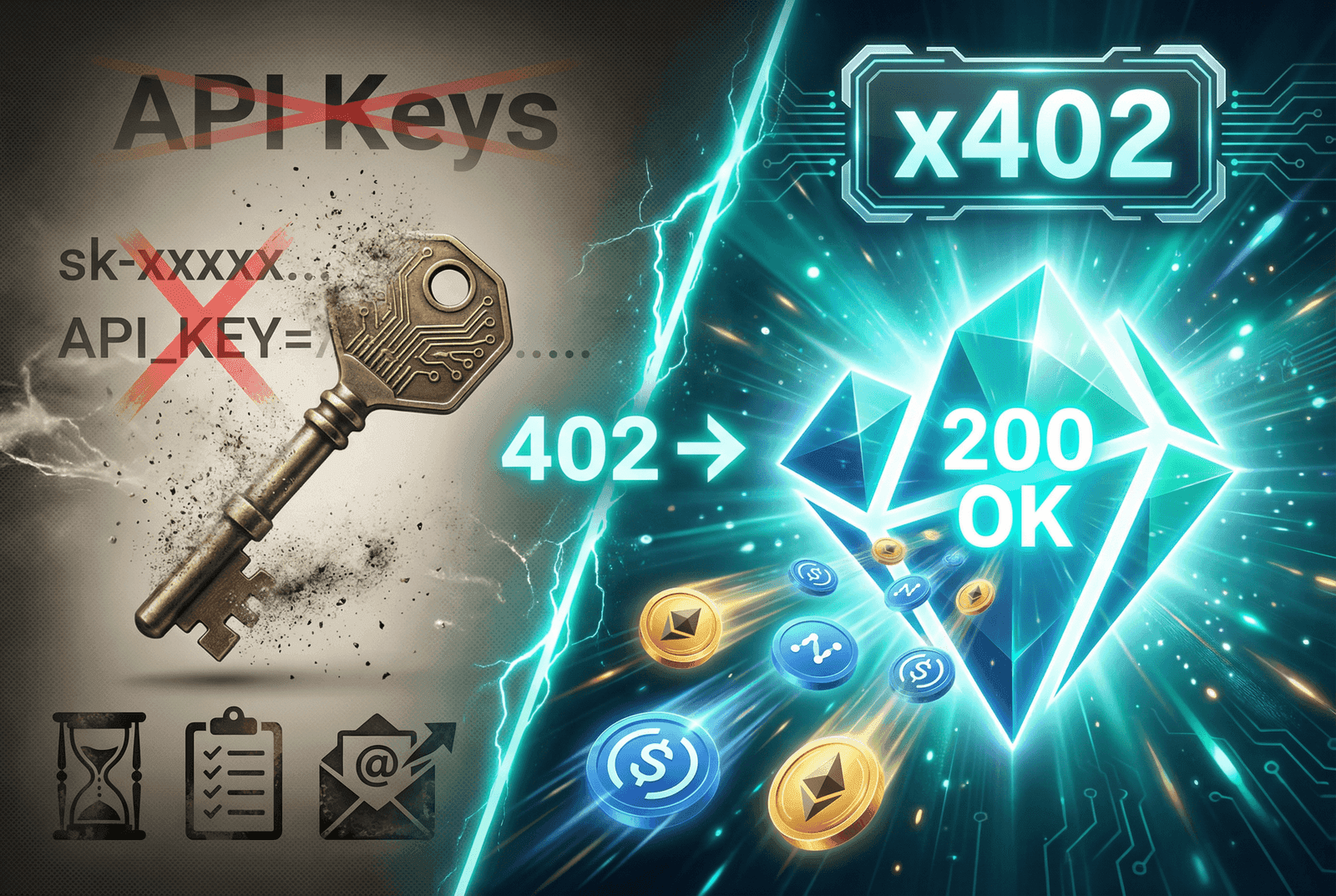
NanoGPT now supports accountless API requests paid with Bitcoin Lightning invoices using L402, alongside Nano, Base USDC, and Solana USDC x402 rails.

Milan joined the THORChain live stream podcast to talk NanoGPT, crypto payments, privacy, AI access, payment stats, and why decentralized liquidity matters for us.
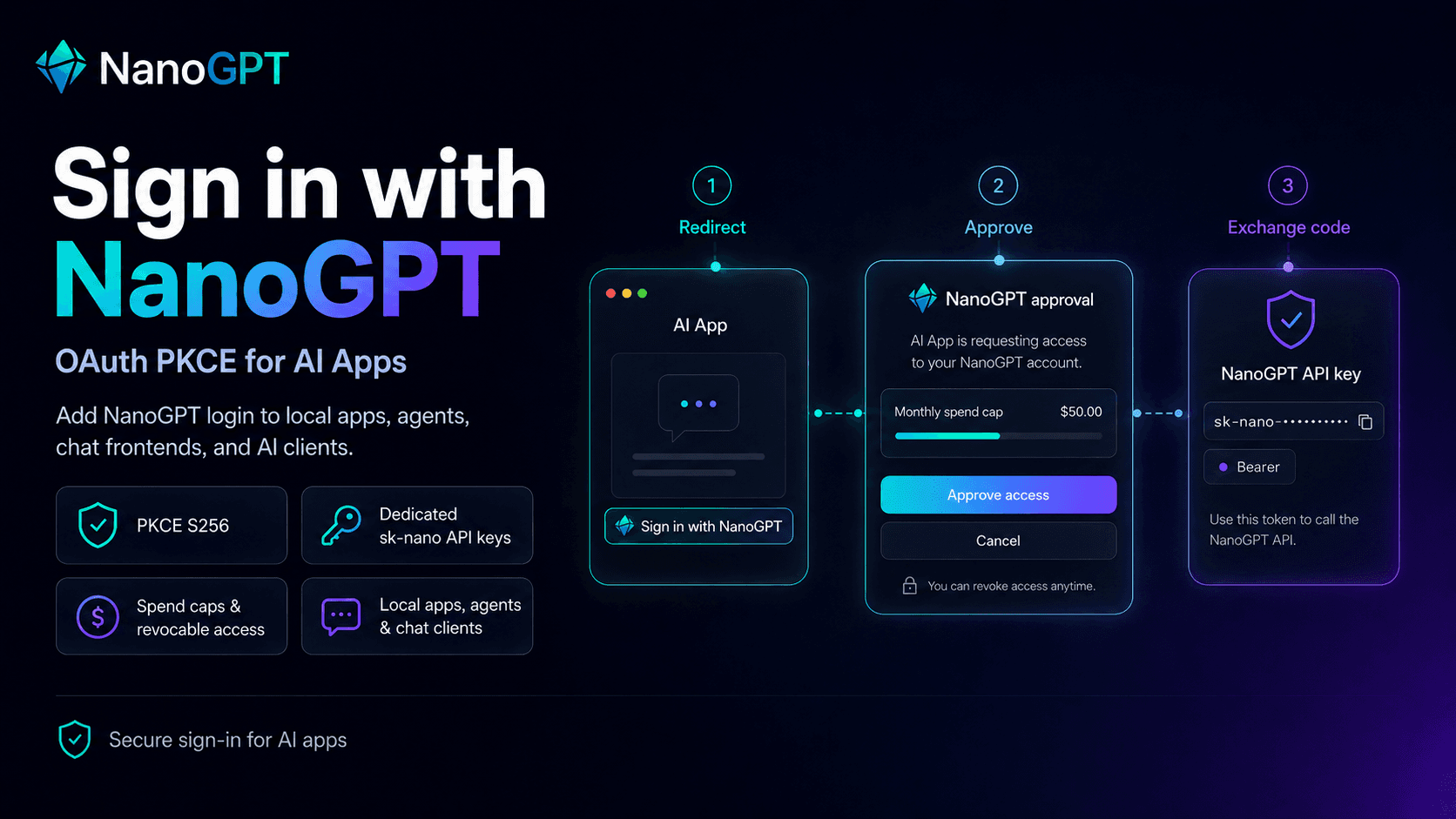
Developers can now add Sign in with NanoGPT to local apps, agents, chat frontends, and OpenAI-compatible clients.
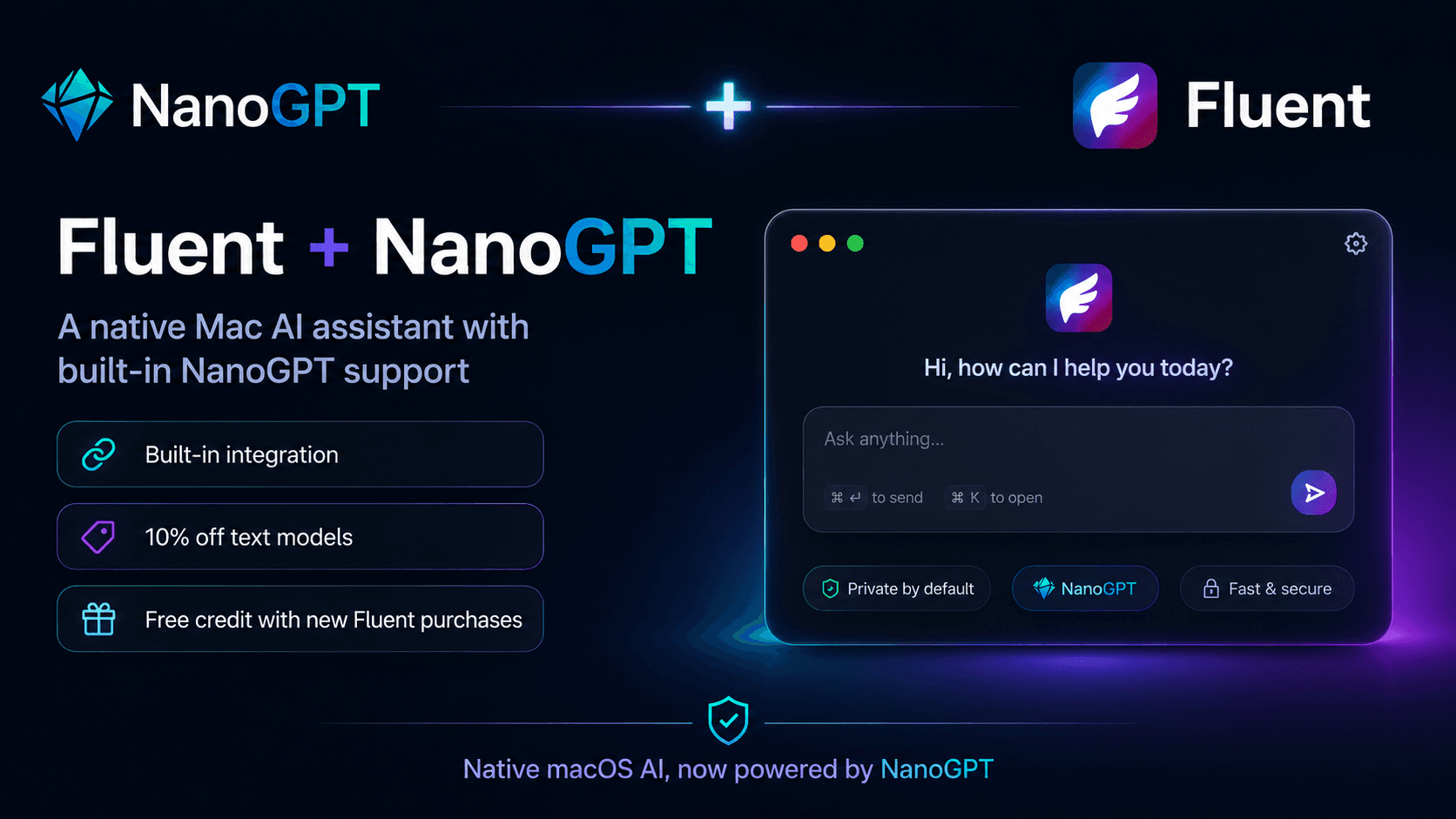
Fluent, the native macOS AI assistant, now ships with a built-in NanoGPT integration, a 10% discount on all text models, and free NanoGPT credit with new Fluent purchases.
NanoGPT and OpenRouter both offer one API for hundreds of AI models at provider list prices. The difference is what happens to your money: OpenRouter takes ~5.5% when you buy credits, NanoGPT credits deposits in full. A detailed comparison.